
Magnetic (Heatbed) Mount for ADXL345 Accelerometer
- Arrives in 2 to 7 business days Printed in Auckland. $10 shipping, free over $75
- 14-day faulty refund If it arrives broken or misprinted, we reprint or refund it
- Secure checkout Card payments handled by Stripe
- Material
- High-Detail Resin (8K)
- Colour
- Grey
- Weight
- ~38 g
- Print time
- ~2.1 h
- Express shipping
- $20
More information
Magnetic Mount for ADXL345 Accelerometer
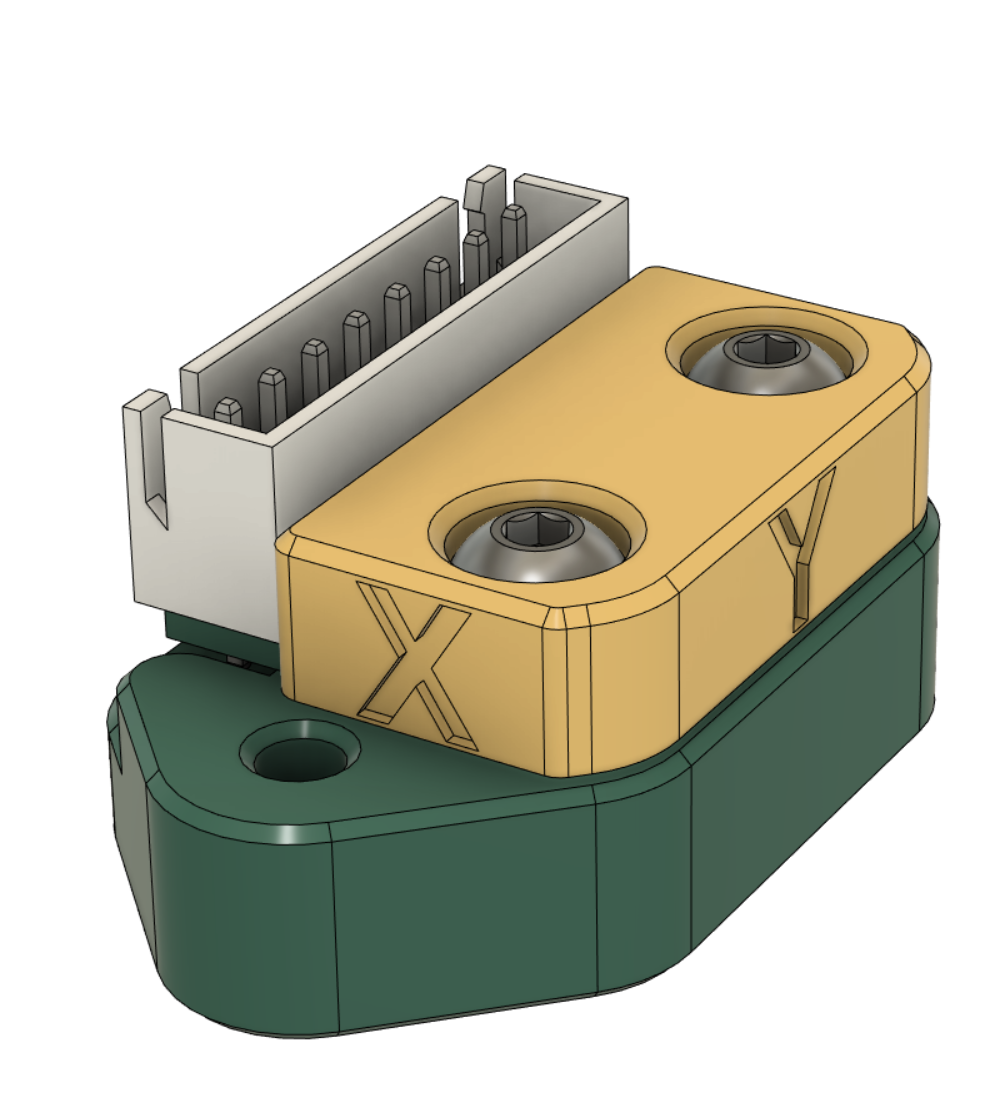
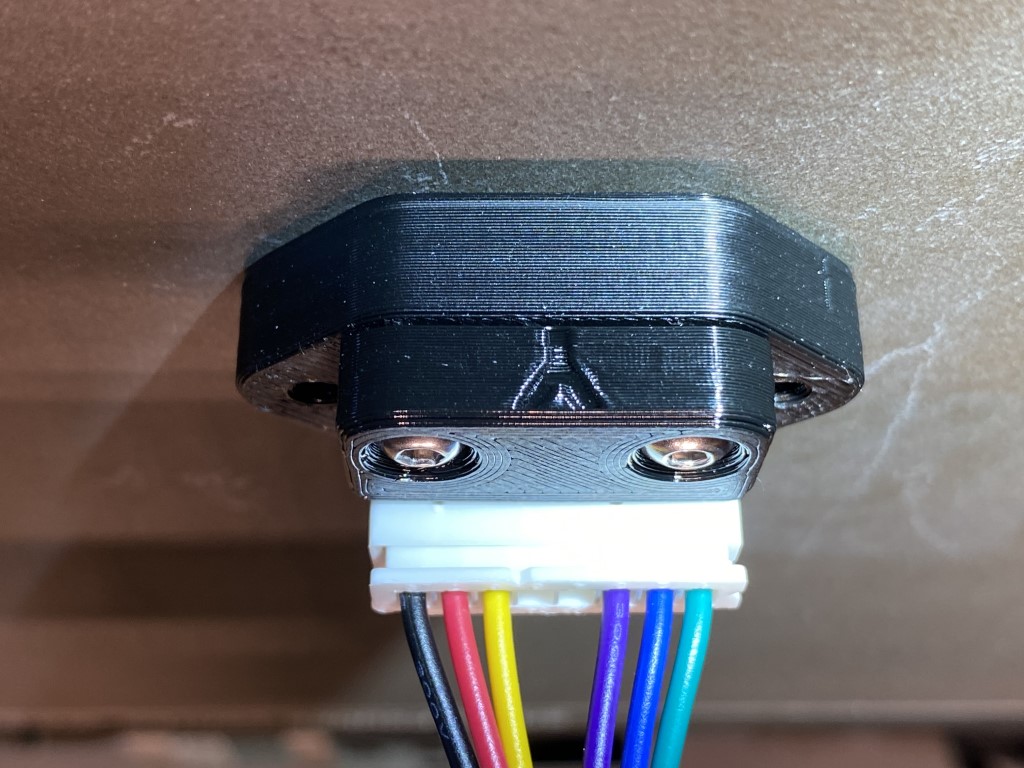
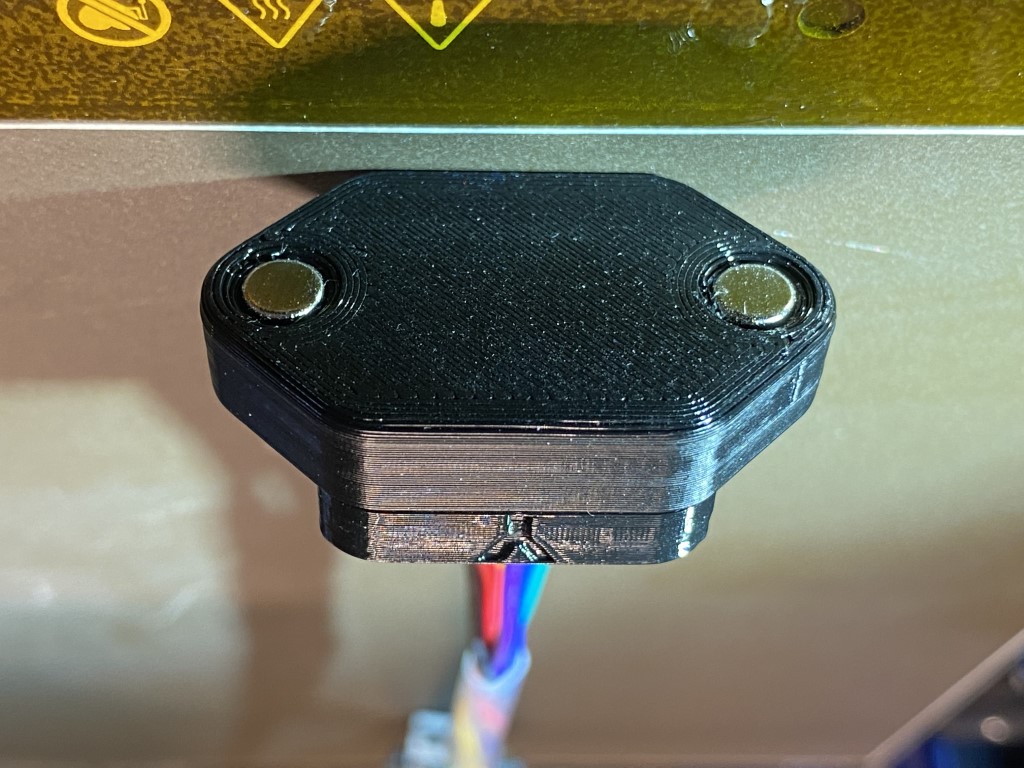
This design is a detachable mount for an ADXL345 accelerometer to be used with Klipper 3D printer software for measuring resonance for its Resonance Compensation (aka Input Shaper) feature. The mount uses 5x5mm magnets to hold itself to a steel print surface on the heatbed. To ensure it doesn't slip, put down a piece of painters' tape on the bed, and then put this on top of it. For best results, place it near the center of the bed with the “Y” label facing towards the Y axis 0 position.
The cover piece has X and Y markings indicating the positive direction for that axis (coming out/away from the cover), based on the accelerometer boards I link below.
Components
The design is sized to accomodate an ADXL345 board that is fairly common in the marketplace. You can find ones that fit on Amazon here:
HiLetgo GY-291 ADXL345
or here:
Teyleten Robot GY-291 ADXL345
There are many others, and if you can't find these or one with similar dimensions, I've included the Fusion 360 source. The source includes a mock-up of the board which I used to ensure clearance.
To attach the sensor to the mount, I have used the M3 x 5 x 4 heat-set inserts that are used with Voron printers. Again, this is a component that is commonly available from a number of sources, including many 3D printer supply shops, Amazon, eBay, and AliExpress (search for "M3x5x4 heatset"). You will also need M3x0.5, 8mm rounded (button) head screws, such as these:
Button Head Hex Drive Screw (McMaster-Carr)
or these:
Metric socket button head, Stainless steel 18-8 (A-2), 3mm x 0.5mm x 8mm (BoltDepot.com)
The magnets I used are these:
5x5mm rare earth magnets
Assembly
I recommend you insert the magnets in the same orientation (poles oriented the same way). You may also want to arrange them so they align with the magnetic poles of the magnets on your heatbed. To do this, place the magenet on the heatbed so that it attracts and doesn't repel. Then with a marker make a mark on the top of the magnet. The side with the mark should be pushed into the mount.
They were a very snug fit for me, so I have included a second version of the STL for the base/mount that has a slightly larger hole. If you need to remove a magnet, there are access holes on top that you can use the push the magnet out.
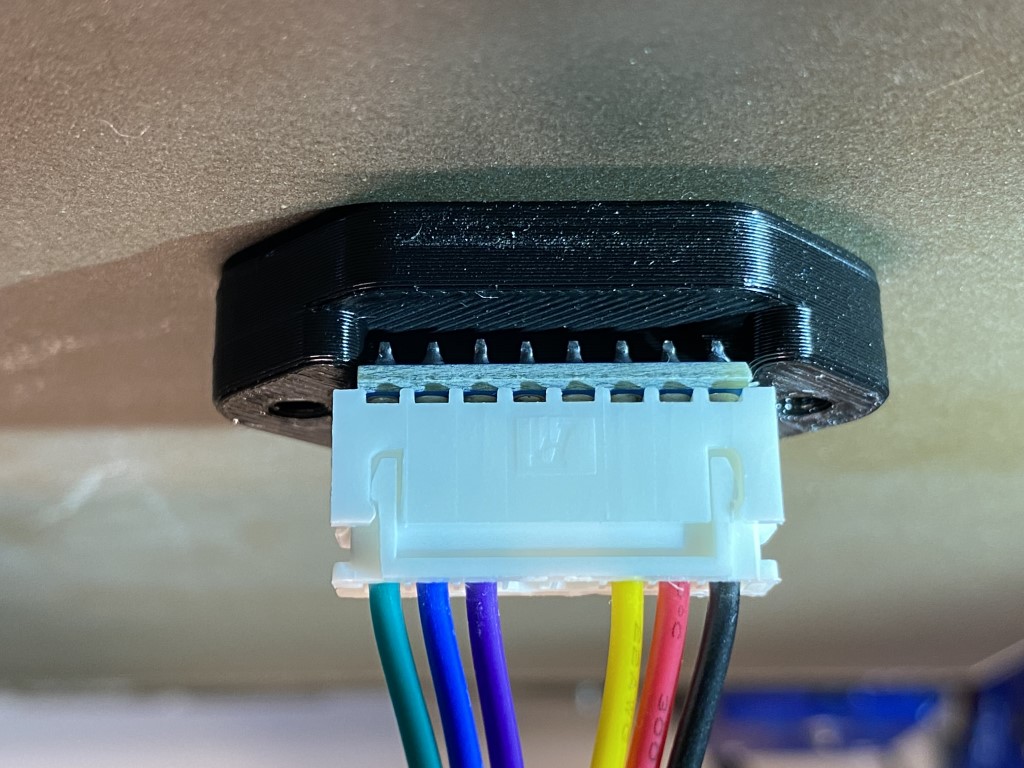
I have attached an 8-pin JST-XH connector to mine, so that I could try out different cable lengths, but this is not required, and there is clearance for you to use a different connector or to solder wires.
Credits
This design was based on an original idea and part from user ngolshan on "The 602 Wasteland" Discord (a Prusa printer related Discord). Many thanks to him for sharing the idea and his design.
Related Designs
• Case for Adafruit QT PY RP2040 (to control ADXL345) • ADXL345 Mount for Bear Extruder
Design and description by motocoder , licensed CC-BY.
Frequently asked
How long does shipping take?
Magnetic (Heatbed) Mount for ADXL345 Accelerometer is printed to order. Lead time is typically 1-3 business days plus 1-4 days NZ shipping. Standard NZ shipping is $10, free over $75.
What material is this printed in?
By default this is printed in High-Detail Resin (8K) at 0.025 mm layer height on an MSLA resin printer. Custom material and colour swaps are available, just leave a note at checkout.
Can I get this in a different colour?
Yes. Every product can be printed in any of the resin colours we stock, or hand-painted on request. Leave a note at checkout or email [email protected].
Do you ship outside of New Zealand?
Currently New Zealand only. Australian shipping is coming.
Who designed this?
Designed by an independent sculptor and licensed for commercial printing. The original is linked on this page.